

NewHydrogen Eyes Orangeville's Utah Nuclear Testbed for Pilot Plant
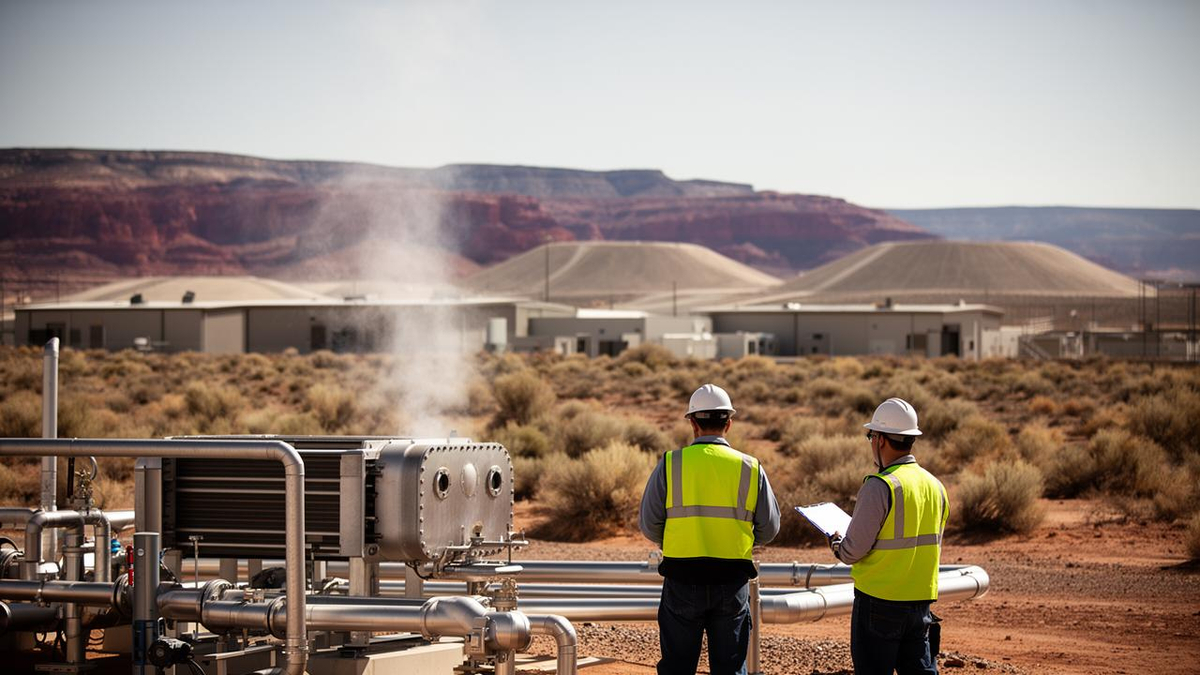
Table of Contents
A Non-Binding Step With Real Site Implications
NewHydrogen, Inc. (OTCQB: NEWH) has signed a non-binding collaboration with the Utah San Rafael Energy Lab, known as USREL, to study whether its 30,000-square-foot facility on more than 40 acres of state-controlled land in Orangeville could host the company's first pilot plant, as first reported by BigGo Finance. The initial assessment covers existing infrastructure, utility capacity, and permitting requirements — the same due-diligence checklist any industrial user runs before committing capital to a site.
Nothing here is final. CEO Steve Hill called the step part of moving from lab validation to field deployment, and both sides have stopped short of any construction commitment. But the fact that a thermochemical hydrogen developer is running this evaluation at a state-owned facility in rural Emery County says something about where advanced-energy siting decisions are actually happening in Utah right now — and it isn't the Wasatch Front.
Orangeville's Buildout as an Energy Proving Ground
USREL already hosts projects tied to Valar Atomics and NuCube Energy, both working on high-temperature nuclear systems. Add a hydrogen developer evaluating the same footprint, and Orangeville starts to look less like a single facility and more like an emerging cluster — one built around a shared need for industrial heat, grid capacity, and permitted land rather than proximity to population centers.
That cluster effect matters for how site selectors think about rural Utah generally. A facility that has already worked through nuclear-adjacent permitting once is cheaper and faster to permit a second and third time. USREL sits inside the Utah Office of Energy Development, which took over the former San Rafael State Energy Lab in 2023 under H.B. 410 specifically to support applied research across nuclear, fossil, and renewable systems. The state built the regulatory pathway before the tenants showed up — a sequencing that tends to compress timelines for the next company through the door.
Where the Commercial Real Estate Value Actually Sits
For owners of large-acreage industrial and energy-adjacent parcels in Emery, Carbon, and neighboring counties, the relevant signal isn't the hydrogen technology itself — it's unproven at commercial scale, and the Department of Energy has flagged durability and reactor-cycling challenges that apply across the entire thermochemical field, not just to NewHydrogen. The signal is that utility capacity, existing infrastructure, and pre-cleared permitting are becoming the scarce commodity in rural siting decisions, not raw square footage of land.
That shifts how these parcels should be valued and marketed. A 40-acre site with three-phase power, water rights, and a permitting history is worth more per acre than triple the land without those attributes, even in a county where land itself is inexpensive. Team Utah Commercial (801-898-8810) has started fielding more inquiries from Emery County landowners asking exactly this question — whether their parcels have the utility and permitting profile that energy developers are now screening for before they'll spend a dollar on site evaluation.
The Gap Between Assessment and Ground Being Broken
NewHydrogen trades on the OTCQB market as a development-stage company, and the collaboration announced this week is explicitly non-binding on both sides. The distance between a site assessment and a construction timeline can be long, particularly for a technology still working through the durability and reactor-cycling problems the DOE has identified as unresolved industry-wide. Investors and landowners near Orangeville should watch for whether this assessment converts into a binding site agreement over the next several quarters, and whether that agreement comes with an actual groundbreaking date attached — that's the point where speculative interest in Emery County's energy corridor turns into leasing and construction activity that shows up in local commercial real estate numbers.
Source: this analysis discusses reporting by finance.biggo.com.
Back to Blog