South Salt Lake's 1,200-Unit Housing Push Reshapes Its Core
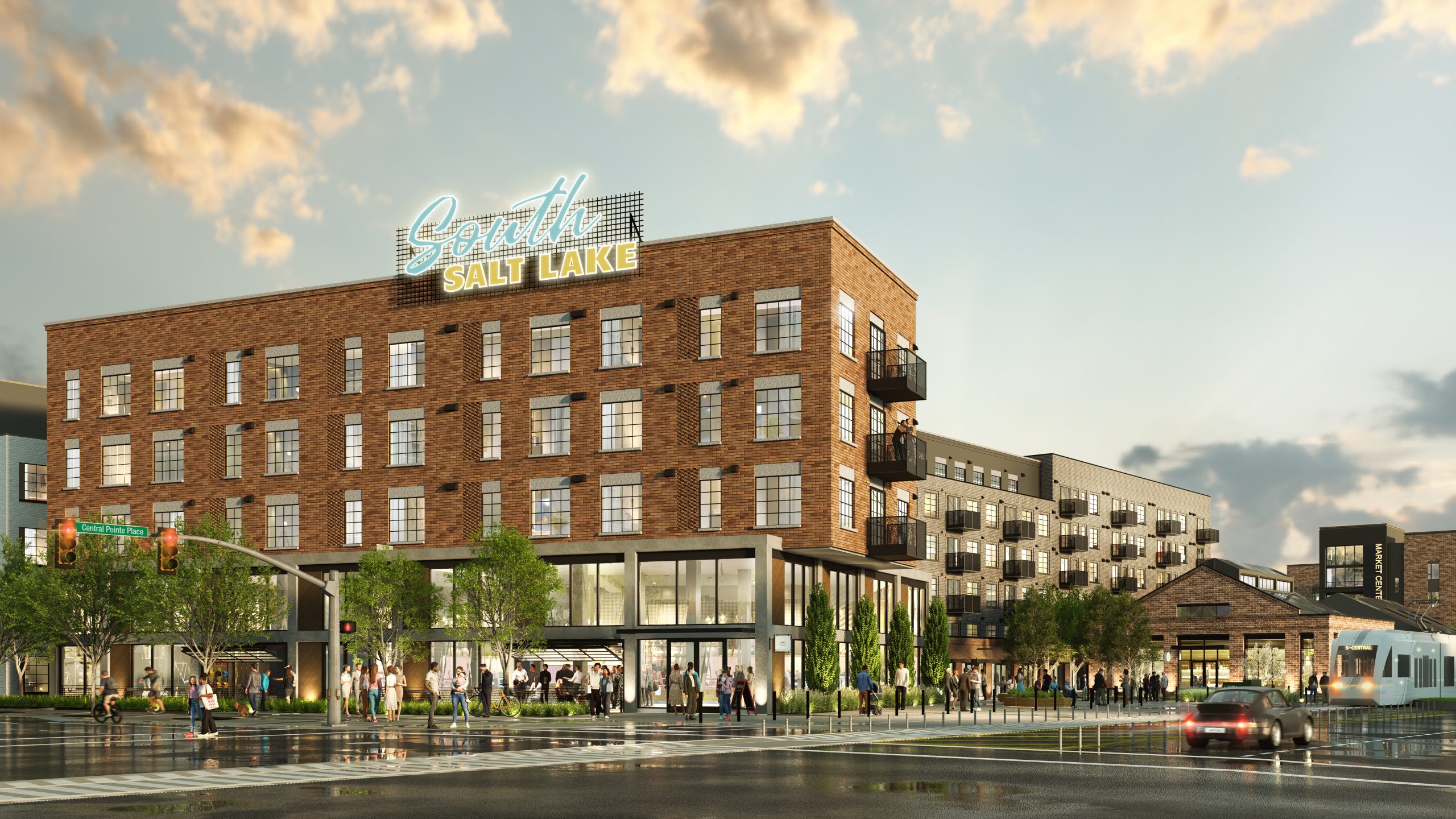
Table of Contents
A Cluster With Real Scale
As first reported by Building Salt Lake, South Salt Lake's plan to build a new downtown around its aging industrial core is no longer theoretical. Roughly six apartment projects within a few blocks of each other — some already leasing, others just breaking ground or freshly approved — combine for more than 1,200 units. That's enough to grow the entire city's population by over 5 percent, which is a rare density jump for a suburb this size.
What stands out to us isn't any single project. It's that four different development groups — Blaser Ventures, dbUrban, Wadsworth Development, Ball Ventures and Greystar — are all working the same few blocks at once. That kind of concentration doesn't happen by accident. It happens because a city rewrote its zoning to reward exactly this, and capital noticed.
The Affordable Housing Anchor at 2280 S. State
Blaser Ventures' Market Center project is the biggest single piece on the board: four buildings, 478 units, all designated affordable housing at 60% AMI, on 5.52 largely vacant acres. Projects of that size built entirely at that income restriction typically lean on tax-exempt bond financing or low-income housing tax credits rather than pure market-rate underwriting.
That matters for how you read the rest of the corridor. An anchor project financed through affordable housing tools can move forward on a timeline that isn't tied to market-rate rent growth, which gives South Salt Lake a stabilizing piece of its downtown plan even if rate conditions cool off market-rate deals nearby. For landlords and retailers watching this area, a guaranteed 478-unit population base arriving on a fixed schedule is a more reliable demand signal than a speculative luxury tower would be.
Smaller Parcels, Same Block
A block away, aQui2194 — 48 studio units on 2194 S. West Temple in the city's creative industries zone — cleared Planning Commission approval in May. It sits immediately next to Wadsworth Development's 187-unit Utopia project at 123 W. Utopia Ave., a joint effort with dbUrban and Ball Ventures.
Two adjacent parcels moving through entitlement at the same time, backed by overlapping development teams, is usually a sign that land assembly and shared infrastructure costs are driving the pace as much as demand is. When dbUrban shows up on both aQui2194 and the Utopia team, it suggests these projects are being coordinated for efficiency — shared parking strategy, phased construction, maybe shared retail tenanting — rather than built in isolation. That's good news for absorption risk on smaller unit counts like the 48-unit aQui2194 building, since it can lean on foot traffic generated by its larger neighbor instead of creating its own.
Belhaven Village Is Only One Building Deep
West of 300 West, Greystar's 330 Belhaven — 84 units, now in lease-up — is the first phase out of the ground on a 22-acre master-planned site near Parleys Trail. Twenty-two acres is a big commitment to have only one 84-unit building completed on. Big-box retail along 300 West currently separates this site from the rest of downtown's momentum, which is worth watching: a master plan this size needs the retail barrier to soften, not harden, for later phases to lease up the way early investors are underwriting.
For owners of that big-box retail frontage, the calculus is now different than it was two years ago. An extra 1,200 renters landing within walking distance is either an opportunity to reposition aging retail toward the new residents, or a signal that redevelopment pressure on that same land is coming next. Team Utah Commercial (801-898-8810) has been fielding more calls from owners along that corridor asking exactly that question.
Lease-Up Pace Will Tell the Real Story
None of these projects prove South Salt Lake's downtown plan has worked — they prove the entitlement and financing pipeline is functioning. The real test comes over the next 12 to 18 months, as 330 Belhaven's lease-up numbers and the pace of construction starts at aQui2194 and Utopia show whether renter demand is actually showing up at the rents these projects need to hit. Market Center's affordable-housing anchor will likely fill regardless of broader rent trends, but the market-rate buildings around it don't have that cushion. Watch occupancy reports out of these buildings before assuming the corridor's second wave gets built on the same timeline as the first.
Source: this analysis discusses reporting by buildingsaltlake.
Back to Blog