
Whiskey Street Rebuild Adds Floor, Rooftop Bar, $1M City Loan
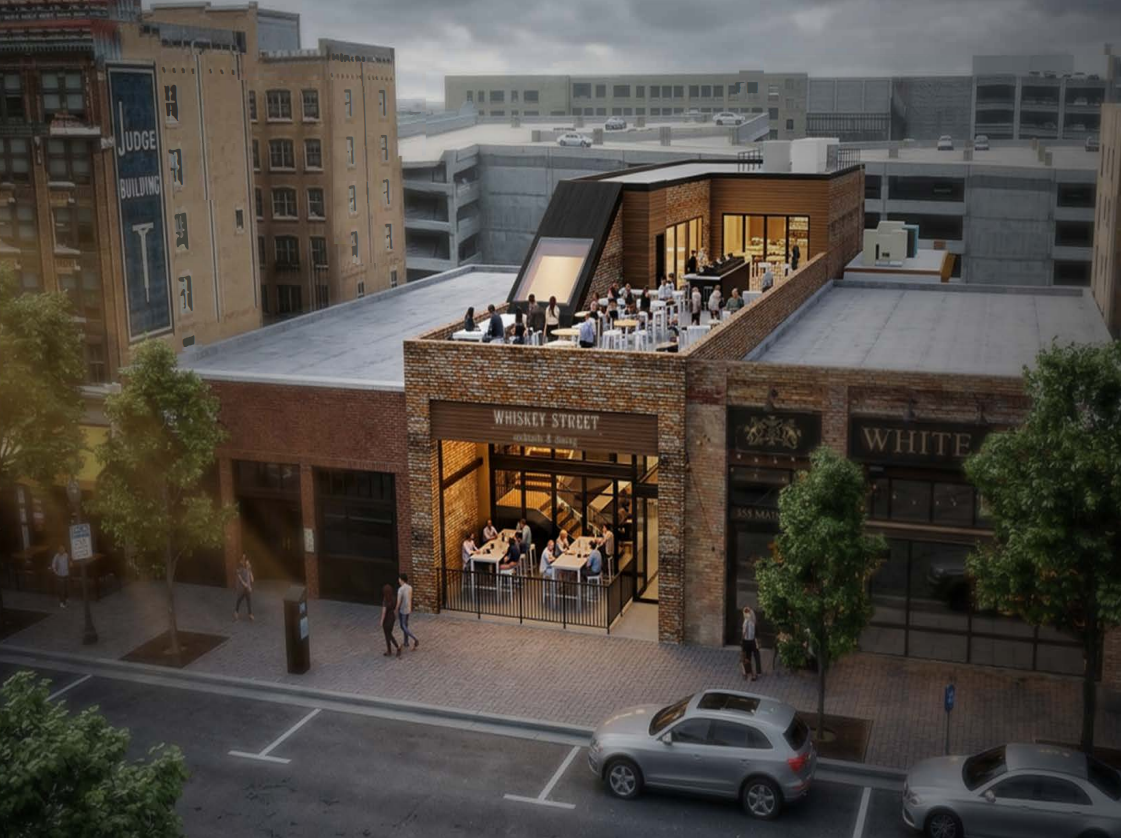
Table of Contents
A $1 Million Ask With Unusual Terms
As first reported by Building Salt Lake, the owners of the Whiskey Street building at 323 S. Main Street are seeking a $1 million loan from Salt Lake City's Community Reinvestment Agency Disaster Relief Loan Program. The property, held by 323 LLC and operated by the Bourbon Group, was one of several Main Street businesses destroyed in a fire just over a year ago. Construction is already underway on the site, which sits on a 0.1-acre parcel — a reminder of how much value density has to carry on a lot that small.
The proposed terms are worth studying on their own: zero percent interest for the first 24 months, stepping up to 2% after that, on a three-year loan term with a 10-year amortization schedule. That structure buys the ownership group two years of essentially free capital while the building comes back online and starts generating revenue again — a meaningful advantage over private construction debt in this rate environment.
The Math Behind the Rebuild
City documents put total redevelopment cost at roughly $3.8 million, with insurance proceeds expected to cover about $1.8 million of that. The resulting $2 million gap is being split down the middle: half from the requested city loan, half from partnership equity. That's a fairly clean capital stack for a disaster rebuild, and it shows insurance alone rarely gets an owner back to a finished, upgraded building — the CRA program exists specifically to bridge that difference rather than let damaged storefronts sit vacant for years while owners chase financing on their own.
The Disaster Relief Loan Program caps out at $1 million per business, which is exactly what Whiskey Street is requesting. For an owner group also running White Horse next door and Franklin Avenue on Edison Street, that subsidized capital frees up equity that might otherwise be spread across three operations instead of concentrated on getting the flagship bar reopened.
Building Up Instead of Building Back
The more telling detail isn't the loan — it's what the money is paying for. Renderings attached to the loan application show a second floor and a rooftop patio, not a replica of the building that burned. On a footprint this small, the only way to add real revenue-producing square footage is to go vertical, and a rooftop bar on Main Street is about as high-value a use of that added floor as this ownership group could choose. It's a rational bet: the same lot now supports meaningfully more seating and bar volume than it did before the fire, financed in part with public dollars carrying below-market terms.
This isn't happening in isolation. In July, the City Council approved a $2 million CRA loan for the Los Tapatios and London Belle rebuild two doors down, also from the same August 2025 fire. That project is going even further — a four-story building housing multiple businesses under one roof, replacing what had been separate ground-floor storefronts. Eva and White Horse have already reopened nearby, so Main Street's recovery is uneven but active, block by block.
A Financing Template Other Owners Will Watch
Two disaster loans in two months, both attached to projects that add density rather than restore what existed, suggests the CRA program is functioning less as a stopgap and more as a tool owners are using to upgrade their real estate. For landlords and investors elsewhere in Salt Lake County who've dealt with fire, flood, or other casualty losses, this is a financing structure worth understanding before assuming insurance proceeds are the only source of rebuild capital. We field these financing and repositioning questions regularly at Team Utah Commercial (801-898-8810), and the Whiskey Street file is a useful case study in how gap financing, insurance, and equity can combine to fund a bigger building than the one that burned.
The CRA board — the City Council sitting in that capacity — takes up the Whiskey Street loan at its 2 p.m. meeting Tuesday. Approval would set the terms for how the next Main Street casualty loss gets financed, and how much appetite the city has for underwriting density gains along a corridor still rebuilding storefront by storefront.
Source: this analysis discusses reporting by buildingsaltlake.
Back to Blog